
Jazyk

A replacement camshaft can carry the right part number and still be the wrong part for the engine. The failure is almost always a specification mismatch rather than a manufacturing defect: duration quoted at 0.006 in advertised lift instead of 0.050 in, a lobe separation angle three degrees tighter than the calibration expects, or a base circle ground 0.030 in smaller than the original, which shifts pushrod preload and rocker geometry.
Engine specifications worth confirming before ordering a replacement camshaft fall into six groups: the physical interface (journal diameters, journal count, camshaft length and thrust provision), the drive interface (timing chain, belt or gear, plus variable valve timing mounting), valve lift, duration together with its measurement reference, lobe separation angle and intake centerline, valve train compatibility (lifter type, lifter diameter, rocker ratio, spring and retainer clearance), and the material and heat treatment of the core.
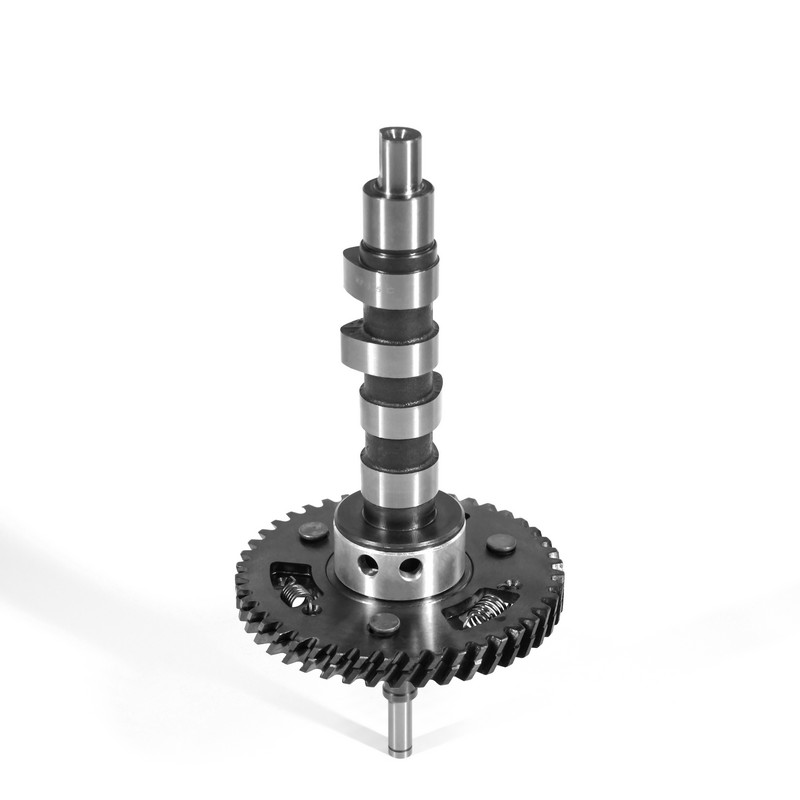
A camshaft is the rotating shaft whose eccentric lobes convert crankshaft rotation into timed valve motion. Its specifications describe lobe shape, the crank angles at which each valve opens and closes, and the physical dimensions that let the shaft fit one specific cylinder head and bearing set.
Most of those numbers can be confirmed in one measurement session with a micrometer, a dial indicator and a degree wheel. Buyers who skip that session usually find the mismatch on the first start, when a lobe touches a spring retainer or the engine idles at 9 in-Hg of vacuum.
Two camshafts can both be catalogued at 240 degrees of duration and behave like completely different parts, because duration is measured at a stated amount of lifter rise. A profile rated at 240 degrees advertised from 0.006 in and a profile rated at 205 degrees at 0.050 in can describe nearly the same lobe. Convert every candidate to one reference before comparing anything.
North American catalogues usually publish advertised duration at 0.006 in (0.15 mm) of lifter rise, while European catalogues commonly use 1.0 mm (0.039 in). The 0.050 in (1.27 mm) reference is the tightest and the most useful for judging idle quality and power band, because it measures the part of the lobe that actually moves air.
| Measurement reference | Lifter rise above base circle | Quoted duration for the same lobe | What the figure is useful for |
| Advertised, North America | 0.006 in / 0.15 mm | 268 degrees | Regional catalogue comparison |
| Advertised, Europe | 1.0 mm / 0.039 in | 205 degrees | European catalogue comparison |
| Performance standard | 0.050 in / 1.27 mm | 202 degrees | Idle quality and power band |
Lift is easier to compare, but it is quoted in two places. Lobe lift is the difference between the base circle and the lobe peak. Valve lift equals lobe lift multiplied by the rocker ratio on pushrod engines, so a 0.310 in lobe with a 1.6 to 1 rocker arm produces 0.496 in of valve lift. Published selection guidance from Engine Builder places stock, unmodified engines in the 195 to 210 degree range at 0.050 in lift, with 210 to 220 degrees reserved for mild street builds.
Before adding lift, check two clearances: piston to valve clearance and spring coil bind clearance, which should stay at 0.060 in (1.5 mm) or more at maximum lift.
Lobe separation angle (LSA) is the angle in camshaft degrees between the intake and exhaust lobe peaks. Production and truck profiles typically use 112 to 116 degrees, street performance profiles 108 to 112 degrees, and race profiles 104 to 110 degrees. Moving the lobes closer together raises the rpm at which peak torque arrives and narrows the band you can actually use.
Overlap is the period when both valves are open, expressed as intake opening before top dead centre plus exhaust closing after top dead centre. A production profile may show 0 to 10 degrees of overlap at 0.050 in, while a 106 degree race profile can exceed 60 degrees advertised. Every degree of added overlap costs idle vacuum, and speed density fuel injection plus vacuum brake boosters need 12 to 14 in-Hg at idle to behave.
Intake centerline is the crank angle after top dead centre at which the intake lobe reaches peak lift. Degreeing a camshaft to within plus or minus 2 degrees of the timing card is the accepted installation standard, and an offset key or adjustable sprocket corrects a mismatch.
A camshaft ground for a flat tappet lifter cannot be run with roller lifters, and the reverse is equally true. Lifter type, lifter diameter, rocker ratio and spring load must be matched before lift and duration are chosen, because each one limits how aggressive the lobe can be.
Pushrod length changes whenever a camshaft is reground, because grinding removes material from the base circle. Hydraulic lifter preload should land between 0.020 in and 0.060 in, and rocker geometry should be checked with the lifter on the base circle rather than at peak lift.
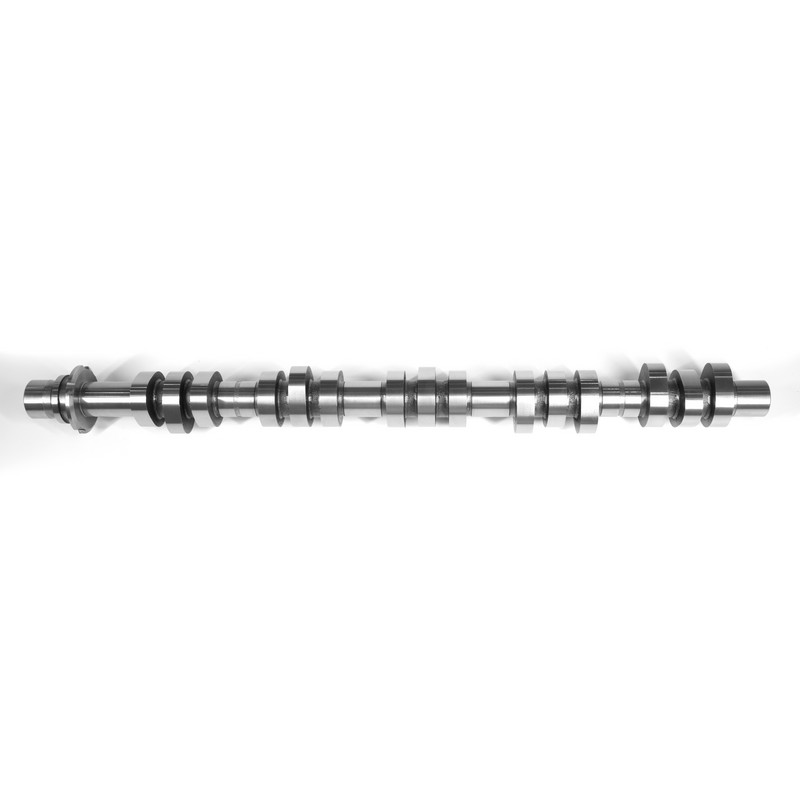 5C3Z6250AA FORD Car Camshaft for Wholesale SupplyView this FORD car camshaft part 5C3Z6250AA for wholesale sourcing; confirm engine family, lifter type, and journal dimensions before ordering.View Product →
KORBOR (Anhui KORBOR Machinery Co., Ltd.) catalogues automotive camshafts by engine family, which lets a buyer filter to the platform first and confirm lifter type and journal dimensions on the individual lobe card afterwards.
Three material families cover the replacement camshaft market: chilled cast iron, nodular (ductile) cast iron, and billet or forged steel. Each has a different core hardness, a different load ceiling and a different hardening process, and none of them can be identified by appearance alone.
| Material | Core hardness | Typical application | Hardening process |
| Chilled cast iron | 45 to 55 HRC at the lobe face | Flat tappet replacement, stock rebuilds | Chill casting against a metal mould |
| Nodular (ductile) iron | 200 to 260 HB, roughly 15 to 25 HRC | Roller lifter and medium load engines | Induction or flame hardening of lobes |
| Billet steel 8620, 1050, 4140 | 58 to 62 HRC case | High lift roller and race profiles | Carburize 0.020 to 0.060 in, quench, temper |
| Nitrided steel or iron | 60 HRC and above at the surface | Overhead cam engines running in the head | Gas or plasma nitriding, 0.005 to 0.015 in case |
KORBOR has manufactured camshafts since 1999, selects high performance alloys, and hardens them through tempering, carburizing and quenching. The company works to IATF 16949:2016 with a zero defect production policy and publishes quality control documentation covering in process inspection.
Hardness without a measurement report is a claim. Ask for the Rockwell C reading on the lobe face, the case depth in millimetres, and the journal runout figure in writing.
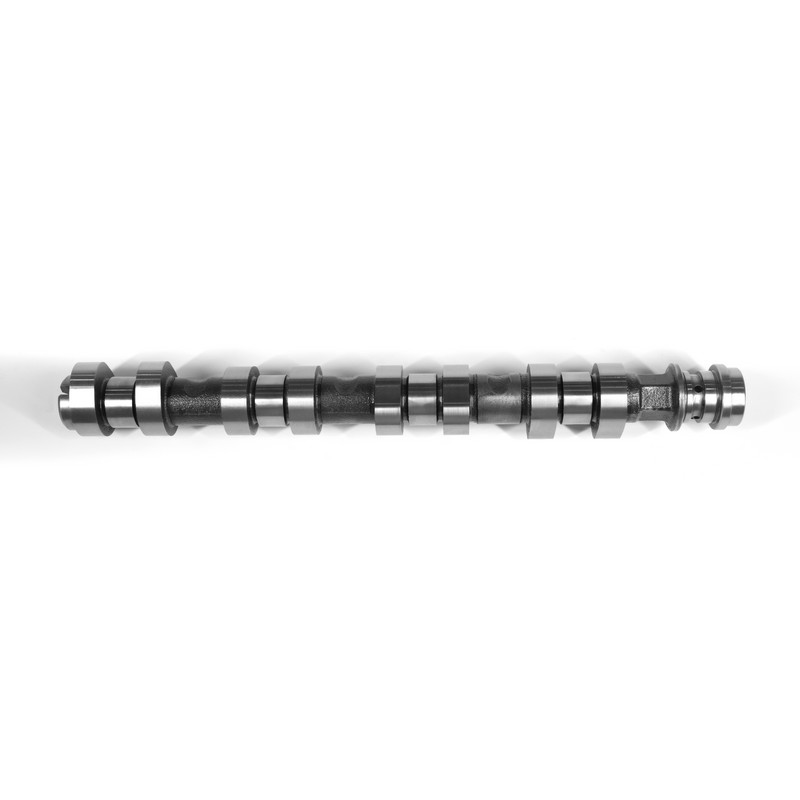 032109101AG VW Car Engine CamshaftVW car engine camshaft 032109101AG offered for wholesale; confirm material and lobe profile by engine code and request hardness, case depth, and runout reports.View Product →
Because one engine code can appear across several model lines, the material and lobe profile should be confirmed against the engine code rather than the vehicle model year.
Four written data points should accompany any replacement camshaft: fitment matched to the engine code, lobe lift and duration with the measurement reference stated, journal diameter and runout values, and a hardness specification. A supplier that cannot produce those four numbers is selling by catalogue description alone.
Measuring lobe hardness, runout and surface finish separates a compliant camshaft from a cosmetically identical one, and the procedure is described in this camshaft quality testing guide.
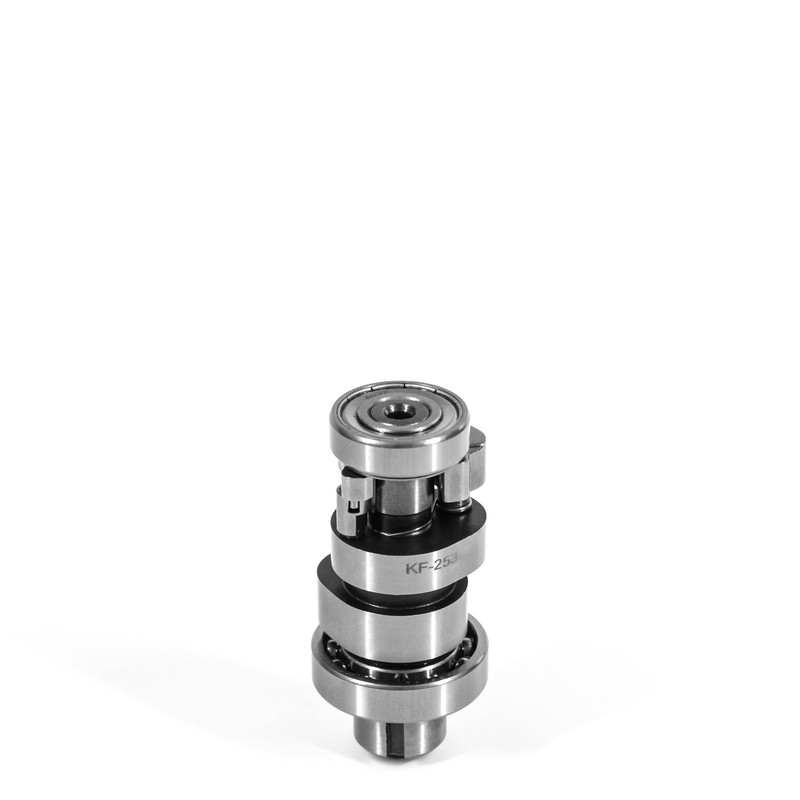 14100-KWW-741Anhui KORBOR Machinery Co., Ltd.,, founded previously known as Ruian KORBOR Camshaft Manufacturing Co., Ltd. in 1999, was initially located in the automobile and motor...View Product →
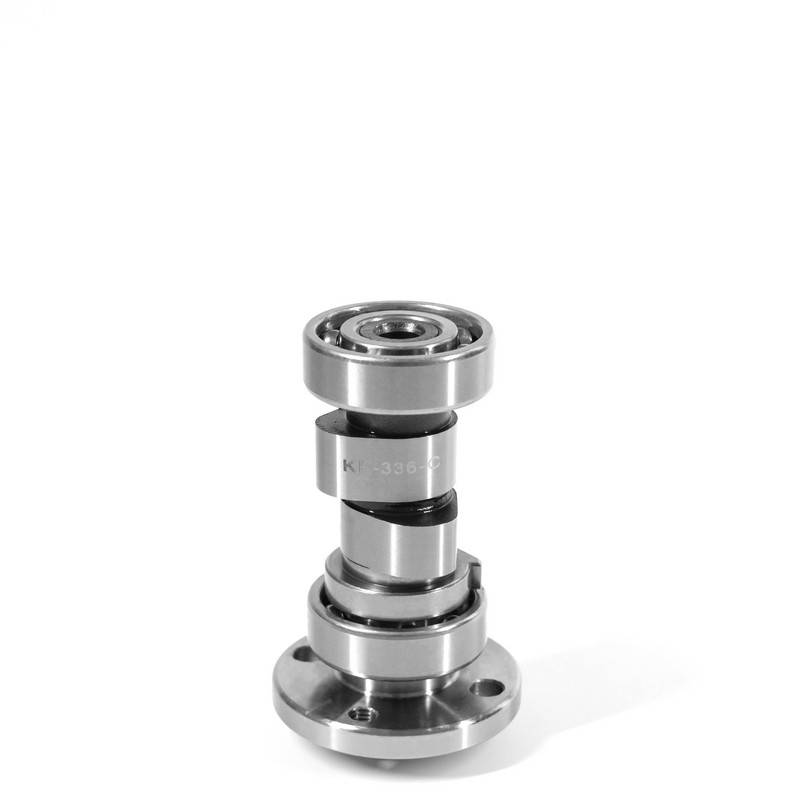
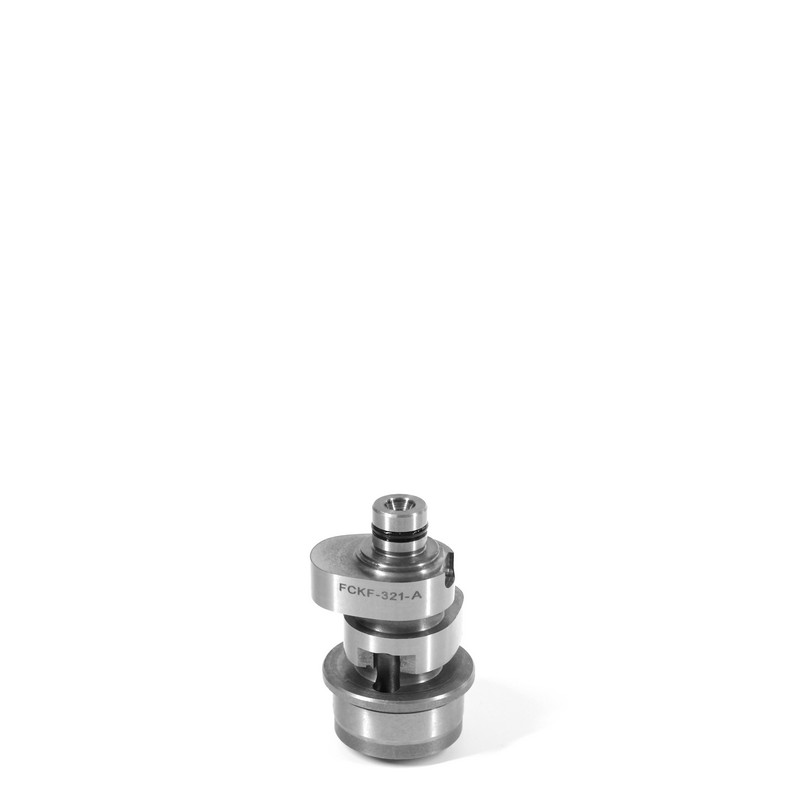
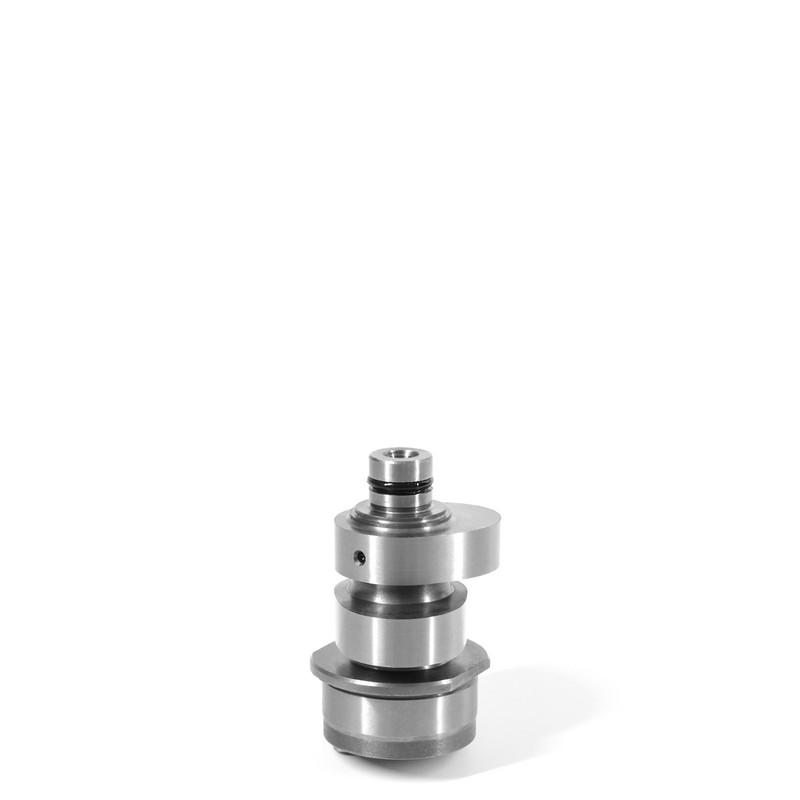
Motorcycle camshafts follow the same rules with one difference: many overhead cam motorcycle shafts run directly in the aluminium head without separate bearing shells, so journal diameter and surface finish tolerances are tighter and a scored journal condemns the head.
Usually yes, but the part number must be checked against the engine code and the camshaft drive configuration. Engines sharing one displacement can differ in journal diameter, firing order, variable valve timing phaser mounting and drive type, so a single catalogue family can hold two non-interchangeable camshafts.
Between 195 and 212 degrees at 0.050 in (1.27 mm) of lifter rise. That range holds idle vacuum above 14 in-Hg on most engines, keeps the torque peak below 4,000 rpm and stays compatible with factory fuel injection calibration.
No. Airflow stops rising once the valve curtain area exceeds the port and valve size, and on many two valve production heads that point arrives between 0.450 in and 0.500 in of valve lift. Additional lift beyond it adds spring load, wear and coil bind risk without a measurable airflow gain.
Four: a fitment list tying part numbers to engine codes, lobe lift and duration data stating the measurement reference, journal diameter and runout values of 0.025 mm or less, and a hardness specification such as 45 to 55 HRC on chilled iron lobe faces. A quality certificate to IATF 16949:2016 covers the process control behind those numbers.
Specification matching is a checklist exercise rather than a judgement call. Confirm the interface, convert duration to a single reference, choose lobe separation angle for the rpm band the vehicle actually uses, respect the valve train limits, and require measurement data with the part. Engines then come back on the road with the power band they were built for.





 闽公网安备 35018102000203 号
